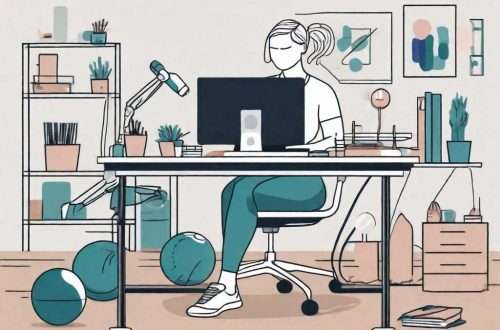
The Best Arms Exercises at Work for Improved Flexibility
In today’s fast-paced work environment, it’s easy to neglect our physical well-being, especially when it comes to our arms. But did you know that having flexible arms is not only important for our overall health, but it can also enhance our work performance?
Why Flexibility is Important for Arm Health
Flexibility in our arms allows us to perform everyday tasks with ease and reduces the risk of injuries. Imagine your arms as the hardworking gears of a well-oiled machine. When they are flexible, they can move smoothly and effortlessly, allowing you to perform tasks with precision and efficiency.
A recent study found that individuals with good arm flexibility experienced fewer instances of musculoskeletal disorders and reported increased productivity at work. So the benefits go beyond just physical health.
The Benefits of Improved Arm Flexibility
When we improve the flexibility of our arms, we unlock a world of benefits. First and foremost, it helps to relieve tension, reduce muscle soreness, and minimize the risk of strains or sprains. This can significantly enhance our overall comfort during the workday.
Moreover, flexible arms improve blood circulation, ensuring that vital nutrients reach our muscles and joints. Increased blood flow also helps to remove waste products and toxins from our arm muscles, promoting their recovery and reducing the risk of inflammation.
Additionally, research shows that flexible arms can improve our range of motion, allowing us to reach for objects more efficiently and reducing the risk of overextending or pulling a muscle. This improved range of motion also translates to better posture, which is vital for overall well-being. Remember, an aligned and flexible arm is a happy arm!
Furthermore, having flexible arms can enhance our athletic performance. Whether you’re an athlete or simply enjoy recreational activities, arm flexibility plays a crucial role in executing movements effectively and efficiently. It allows you to swing a tennis racket with more power, throw a baseball with better accuracy, or lift weights with proper form.
Moreover, flexible arms can also contribute to better balance and coordination. When our arms are flexible, they can move in sync with the rest of our body, allowing for smooth and coordinated movements. This can be particularly beneficial in activities that require fine motor skills, such as playing a musical instrument or painting.
Common Causes of Arm Stiffness and Lack of Flexibility
Many factors can contribute to arm stiffness and a lack of flexibility at work. One of the main culprits is our sedentary lifestyle. Spending prolonged periods sitting at a desk or using repetitive arm motions without proper stretching can cause muscles to tighten and shorten over time.
Our tendency to hold stress in our bodies is another factor to consider. When we’re stressed, we tend to tense up our muscles, including those in our arms. This chronic tension can lead to reduced flexibility and increased discomfort.
Furthermore, poor ergonomics and incorrect posture can also contribute to arm stiffness. If our workspace is not properly set up to support our arms and shoulders, we may develop muscle imbalances and stiffness.
In addition, certain medical conditions, such as arthritis or tendonitis, can also lead to arm stiffness and reduced flexibility. These conditions can cause inflammation and pain, making it challenging to maintain a full range of motion in the arms.
Lastly, age can also play a role in arm stiffness and decreased flexibility. As we get older, our muscles tend to lose elasticity, making them more prone to stiffness and tightness. However, regular stretching and exercise can help counteract the effects of aging and maintain arm flexibility.
Stretching Exercises for Improved Arm Flexibility
Now that we understand the importance of arm flexibility, it’s time to explore some stretching exercises that can be incorporated into our work routine. These exercises will help us combat arm stiffness and improve our overall flexibility, allowing us to tackle our work tasks with ease and comfort.
Arm and Shoulder Stretches to Do at Your Desk
Let’s start with some simple arm and shoulder stretches that can be done right at your desk. These stretches will help release tension and increase blood flow to your arms:
- Shoulder Rolls: Sit up straight and roll your shoulders forward in a circular motion for 10-15 seconds. Then, reverse the direction and perform the rolls backward. This exercise helps to loosen up your shoulder muscles and improve their flexibility.
- Tricep Stretch: Extend one arm straight overhead and bend it, so your hand reaches towards the middle of your upper back. Use your other hand to gently pull the bent arm towards your opposite shoulder. Hold this stretch for 15-20 seconds on each side.
- Wrist and Forearm Stretch: Extend your arm in front of you, palm facing down. With your other hand, gently pull back on your fingers, feeling a stretch in your wrist and forearm. Hold for 15-20 seconds on each side.
Performing shoulder rolls not only improves flexibility, but it also helps to relieve stress and tension in the shoulder area. As you roll your shoulders, imagine releasing any built-up tension, allowing your muscles to relax and providing a sense of relief.
Stretching your triceps is crucial for improving arm flexibility. The triceps are responsible for extending the elbow joint, and by stretching them, you can increase their range of motion. This stretch also targets the muscles in your upper back, promoting better posture and reducing the risk of shoulder and neck pain.
Our wrists and forearms play a vital role in our daily work activities, such as typing and using a mouse. Stretching these areas can prevent discomfort and injury. This stretch specifically targets the flexor and extensor muscles in the forearm, helping to improve grip strength and flexibility.
By incorporating these arm and shoulder stretches into your daily work routine, you can enhance your arm flexibility and reduce the risk of stiffness and discomfort. Remember to perform these stretches regularly and listen to your body’s limits. With consistent practice, you’ll notice a significant improvement in your arm mobility and overall well-being.

Erden Tuzunkan
LinkedIn's Top Voice in Entrepreneurship ► I help (Paralyzed) Entrepreneurs find meaning & clarity ► Business Coach ► Founded 4 startups & 4 successful exits ► Health & Wellness Blogger ► Dad x 3 ► Growing a portfolio of online businesses → Coaching → E-Book (Cooking up) → Digital Course ( On the way) → Blog: Healthy Work Habits → Newsletter (Taking shape) ► I'm on a mission to build a portfolio of digital businesses to make the lives of Overachievers, Mid-Career Professionals & Entrepreneurs more purposeful. → Building an audience online to thrive together. → Posts & articles about the process. → Mental Health Advocate ► Co-founder of Albert Solino Consulting (Exit in 2023) → Proudly hired, developed, and led an in-house team of 65 consultants. ( Many of them are still colleague-turned friends) ► Consulting Portfolio → Management Consultancy → Strategic Planning → OKR → Human Resources → Performance Management → Employee Engagement → Remote Work → Digitalization ► Acted as CMO and managed all omnichannel marketing efforts including → Website Development → Google Ads Management → SEO → Blog Management → Youtube Content Marketing → E-mail Marketing → Newsletter Marketing → Referral Partnerships → Business Development ► Blue-chip client list including: → Ford (Dearborn, MI) → Cigna Group (Bloomfield, Connecticut) → Concentrix - Webhelp (Fremont -CA & France) → JotForm (SF - CA) → Barsan Global Logistics, Inc. (Chicago - IL) → Novartis / Sandoz (Switzerland) → BEKO Global (Switzerland) → Carrefour (France) → Saint-Gobain (France) → Legrand (France) → Faber-Castell (Germany) → MAHLE (Germany) → Aegon (The Netherlands) → Energy Exchange Istanbul (EXIST) (Turkey) → ENKA Construction (Turkey) → Trendyol.com / Alibaba Group (China - Turkey) → Daiichi Sankyo (Japan) → Elleair International (Japan) → QNB - Qatar National Bank (Qatar) → Metair (South Africa) ► Co-Founder of Corvisio HR Management & OKR Platform (Exit in 2023) ► Co-founded Prosoftly (Exit in 2023) ► Co-Founder of Mailsoftly (Exit in 2023)